What Causes a Bellied Sewer Pipe
A bellied sewer pipe is a sagging section of your line that traps waste and causes repeat backups. Here are the real causes we see in Roswell, GA.
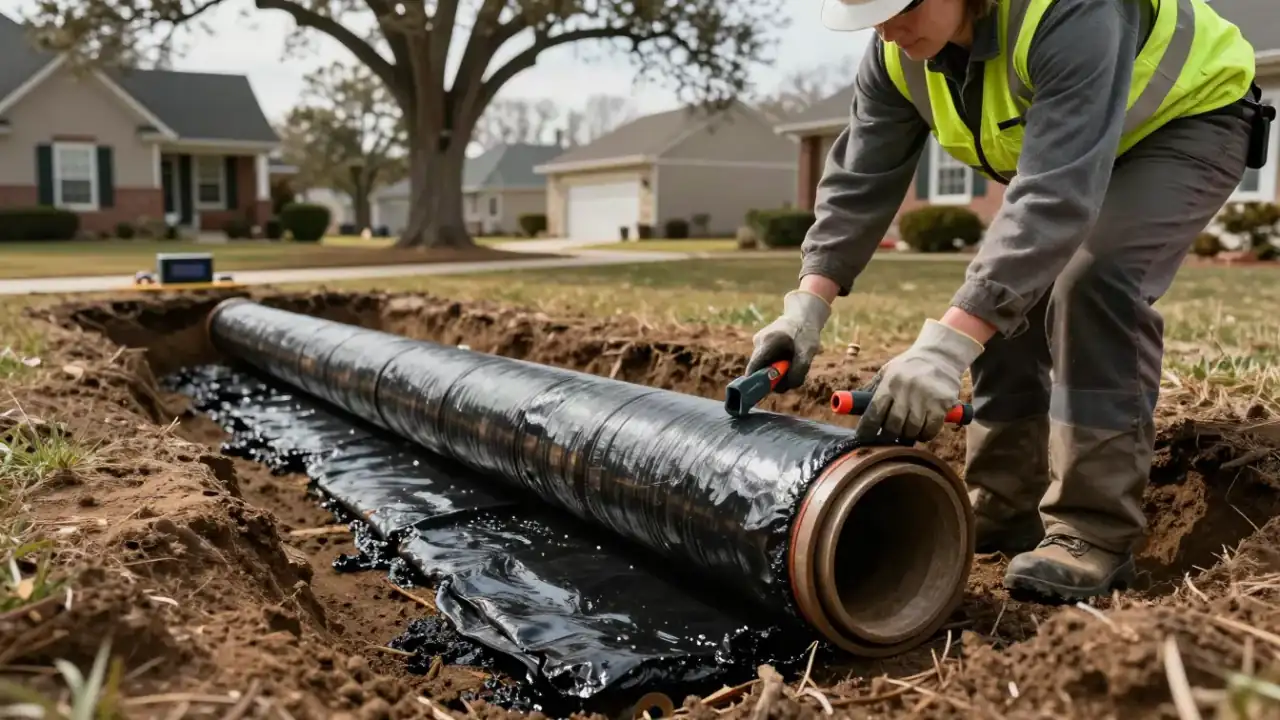
A bellied sewer pipe is caused by the ground beneath it settling, shifting, or eroding until a section of the pipe sags and forms a low spot that traps water and waste. In Roswell, GA, the most common culprits are expansive red clay soil, decades-old clay or cast iron pipe, tree root pressure, and poor backfill from an earlier repair. Once that sag forms, water stops draining, solids pile up, and you get backups that keep coming back no matter how many times you snake the line.
We have run cameras through hundreds of Roswell sewer lines, and the belly is almost never the only problem. Below we break down exactly what causes a bellied pipe, how to spot one before it floods your basement, and the repair options that actually work in this soil.
What a Bellied Sewer Pipe Actually Is
A bellied sewer pipe is a section of sewer lateral that has lost its downward slope and now dips below the rest of the run, creating a bowl where wastewater and solids collect. Sewer lines rely on gravity. A properly installed lateral drops about a quarter-inch per foot toward the city main. When that grade is lost, even by an inch or two over a ten-foot span, the line stops being a drain and starts being a settling tank.
Debris settles at the low point. Paper, grease, and grit stack up. Water pools on top. Eventually the pipe fills to the top and backs into your lowest fixture - usually a basement floor drain, a laundry standpipe, or the shower. You snake it, it flows for a week, then it backs up again. That cycle is the signature of a belly.
It helps to separate a belly from an offset. A belly is a sag along the pipe's length. An offset is a joint where two pipe sections have shifted sideways or vertically and no longer line up. Both cause repeat clogs, and both show up clearly on camera. If you want to know which one you have, the answer comes from a sewer camera inspection Roswell GA - a scope that shows the exact location, depth, and severity of the defect.
Why Sewer Pipes Belly in Roswell, Georgia
Roswell's soil and housing stock create ideal conditions for sewer pipe sagging. The city sits on Georgia red clay - a dense, expansive soil that swells when it gets wet and shrinks when it dries. That cycle repeats every year, and it moves whatever is buried in it.
Here are the specific causes we find most often:
- Soil settlement and erosion. Water from a leaking irrigation line, a downspout dumping next to the foundation, or a slow roof leak saturates the soil under the pipe, washes out the bedding, and lets the pipe drop.
- Expansive clay movement. Roswell's clay expands in wet springs and contracts in dry summers. Over 10 to 20 years, that movement can pull a pipe out of grade.
- Tree root pressure. Roots from oaks, maples, and pines don't just invade joints - they can lift and shift pipe sections. A root mass pressing down on one side of a line can push it into a belly shape.
- Old pipe materials. Many Roswell homes built before 1980 still have vitrified clay or cast iron laterals. Clay is brittle and cracks under load. Cast iron corrodes from the inside out and loses structural strength.
- Poor backfill after a prior repair. If a previous contractor backfilled a trench with loose dirt or didn't compact the bedding, the pipe settles unevenly and forms a low spot within a few years.
- Heavy vehicle traffic. Driving over a shallow sewer line - even a loaded pickup - compresses the soil and can push a pipe down.
We see this pattern constantly in neighborhoods like Sewer Line Repair in Saddle Creek, where 1980s and 1990s builds are now hitting the age where original laterals start to fail. The same is true in Martin's Landing and Willow Springs. If your home is 30 to 45 years old and still on the original sewer line, a belly is a real possibility.
Warning Signs You Have a Bellied Pipe
The warning signs of a bellied sewer pipe in Roswell are repeat backups, slow drains throughout the house, and gurgling fixtures - not just one clogged toilet. A single slow drain usually means a local clog. Multiple fixtures draining slowly at the same time points to the main line.
Watch for these:
- Backups that return within days or weeks of snaking.
- Water pooling in the lowest drain in the house - often a basement floor drain or laundry standpipe.
- Gurgling sounds from toilets or tubs when you run the washing machine.
- Sewage odor in the yard, especially over the sewer line path.
- Patches of unusually green, spongy grass along the lateral.
- Slow drainage everywhere, not just one fixture.
One more sign that gets missed: a dip in the yard. If the ground over your sewer line has settled into a shallow trench, the pipe below it likely settled too. We have walked properties in Sewer Line Repair in Historic District where the visible yard depression lined up exactly with a belly on camera.
How Do You Fix a Bellied Sewer Pipe in Roswell, Georgia?
Fixing a bellied sewer pipe in Roswell means either restoring the pipe's grade by re-bedding it or replacing the sagging section entirely - and the right method depends on how deep the pipe sits, what it's made of, and how much of the run is affected. A short, shallow belly in a sound pipe can sometimes be spot-repaired. A long sag in brittle clay pipe usually needs full replacement of that section.
Here are the options we use:
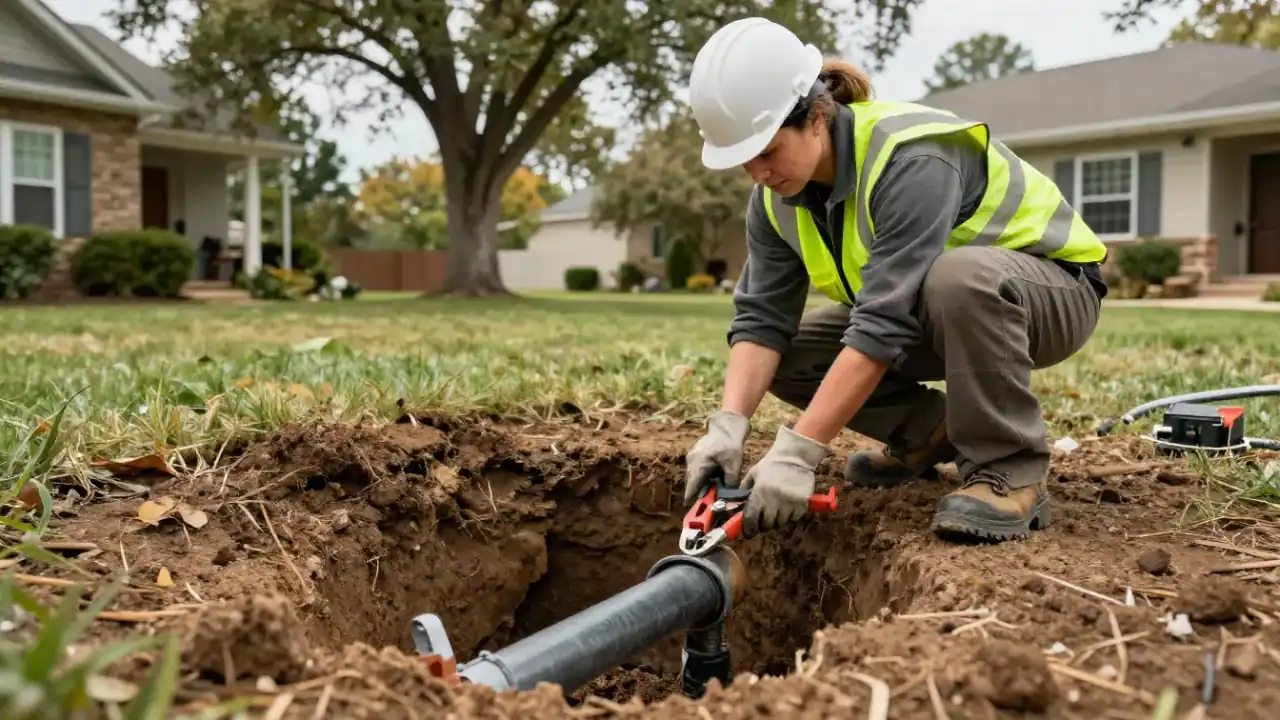
- Spot repair. We dig down to the belly, cut out the sagging section, re-bed the new pipe at correct grade, and backfill with compacted stone. This works when the defect is isolated and the rest of the line is in good shape.
- Trenchless repair. For pipes under driveways, patios, or mature landscaping, we can replace the line without tearing up the surface. trenchless sewer line repair Roswell GA pulls a new pipe through the old one or bursts the old pipe outward while pulling new HDPE in behind it.
- Pipe lining (CIPP). If the pipe is structurally sound but has cracks or root intrusion contributing to the sag, a cured-in-place liner can seal it from the inside. This is not a fix for a severe belly - a liner follows the existing shape, including the sag - but it works well for mild cases with joint damage.
- Full lateral replacement. When the pipe is old clay or corroded cast iron and the belly is one of several defects, replacing the whole run is the better long-term call.
Typical 2026 pricing in this area runs $1,800 to $4,500 for a spot repair, $6,000 to $14,000 for trenchless replacement of a full residential lateral, and $4,500 to $11,000 for traditional open-cut replacement. Cost depends on depth, length, surface restoration, and whether the city main connection needs work.
If you want the least disruptive option and your line runs under a driveway or established trees, ask specifically about pipe bursting Roswell GA. It replaces the pipe at the same diameter or larger and avoids the trench.
Common Mistakes Homeowners Make
The biggest mistake we see is treating a bellied pipe like a clog. Snaking, drain chemicals, and store-bought enzymes clear the symptom for a few days but do nothing about the sag. The low spot stays, the solids return, and you are back to the same backup within weeks.
Other mistakes:
- Ignoring repeat backups. Two backups in a month is a structural problem, not a clog. Waiting usually means sewage in the house.
- Hiring on price alone. A cheap snake job that doesn't include a camera leaves you guessing. Always ask for the camera footage.
- Skipping the camera before buying a home. A standard home inspection does not scope the sewer lateral. If you are buying in Roswell, a sewer lateral inspection Roswell GA before closing can save you a five-figure surprise.
- Planting trees over the line. New oaks or maples within 10 feet of the lateral will find the pipe within a decade.
- Letting a slow drain ride. Slow drains are the early warning. Fix them before they become backups.
When to Call a Professional
Call a professional when you have had two or more backups in the same line within 30 days, when multiple fixtures drain slowly at once, or when you smell sewage in the yard. Those are the signs of a structural defect, and no amount of snaking will fix them.
Our team at Roswell Sewer Line Repair scopes the line, shows you the footage, and tells you exactly what is causing the belly and what it will take to fix it. We handle everything from spot sewer line repair Roswell GA to full lateral replacement, and we do it with upfront pricing before we start.
If roots are part of the problem - and in Roswell they usually are - we also handle root intrusion repair Roswell GA so the new pipe is not immediately under attack.
Frequently Asked Questions
What causes a bellied sewer pipe in Roswell, GA?
Soil settlement, expansive red clay, tree root pressure, old clay or cast iron pipe, and poor backfill from prior repairs. Any of these can cause a section of pipe to lose grade and sag, trapping waste and causing repeat backups.
How do you fix a bellied sewer pipe in Roswell, Georgia?
We either spot-repair the sagging section by re-bedding it at correct grade, or replace the affected run using trenchless methods or open-cut excavation. The right fix depends on depth, pipe material, and how much of the line is affected. Most repairs take one to three days.
Is a bellied sewer pipe covered by insurance in Roswell, GA?
Standard homeowners insurance usually excludes sewer line repair, calling it a maintenance issue. Some policies cover resulting water damage inside the home. Sewer line service line endorsements or separate sewer line warranties are the most common way Roswell homeowners get coverage.
Can a bellied pipe be repaired without digging in Roswell, GA?
Sometimes. Trenchless methods like pipe bursting can replace a bellied section without a continuous trench, but a severe belly may still require a small access pit at each end. We confirm feasibility with a camera inspection before recommending a method.
How much does bellied sewer pipe repair cost in Roswell, Georgia?
In 2026, spot repairs run $1,800 to $4,500. Trenchless full-lateral replacement runs $6,000 to $14,000. Open-cut replacement runs $4,500 to $11,000. Final cost depends on depth, length, and surface restoration.
Get Help with Sewer Line Repair in Roswell
If your line keeps backing up, we can scope it, show you the belly on camera, and give you a straight answer on the fix. Call Roswell Sewer Line Repair at (770) 214-4809 and we will get your sewer line flowing the way it should.