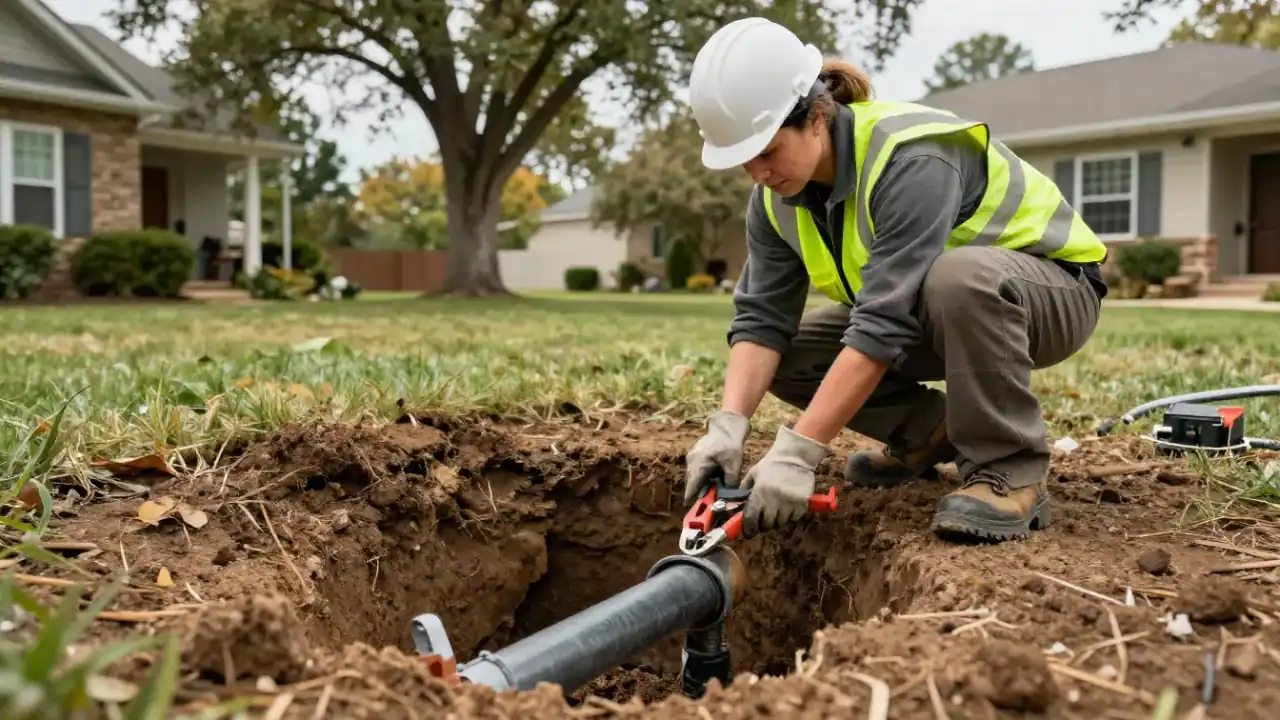
Spot Repair or Full Replacement for a Sewer Line
Spot repair or full replacement for a sewer line in Roswell, GA comes down to pipe material, damage length, and depth. Here is how we make the call.
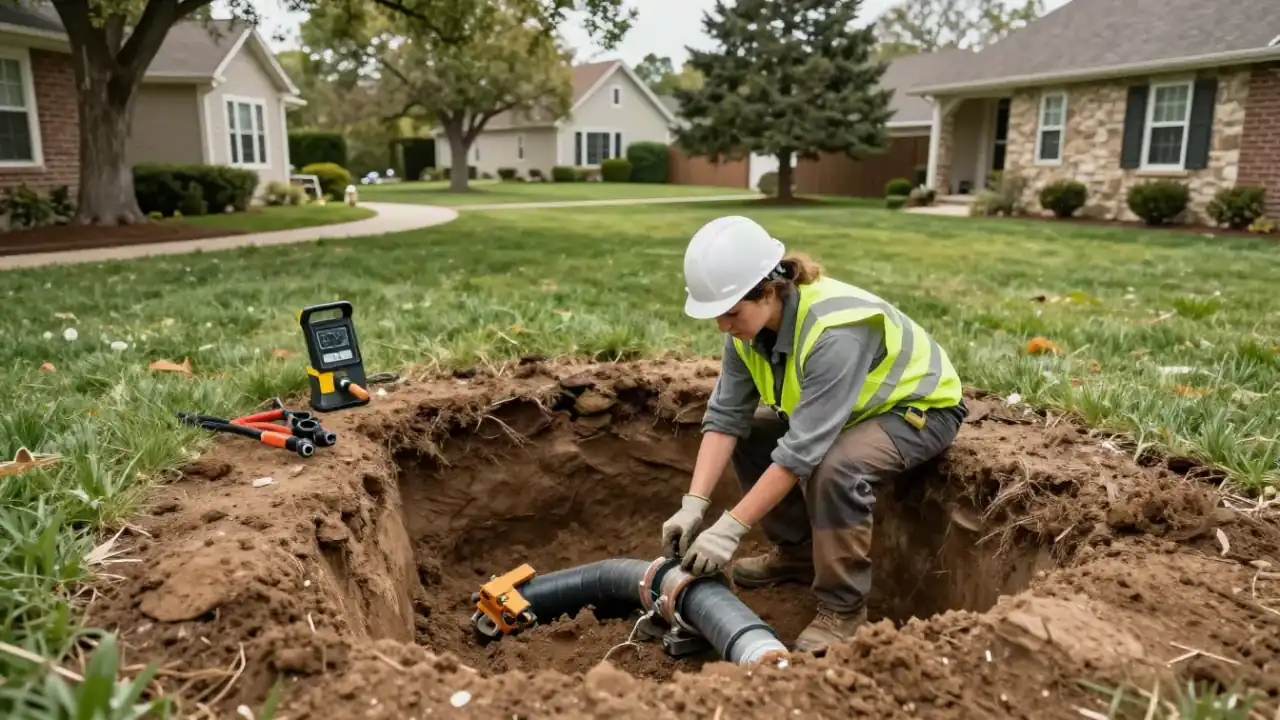
Spot repair or full replacement for a sewer line comes down to three things: how long the damaged section is, what the pipe is made of, and how deep it sits under your yard. If the break is one isolated crack or joint failure and the rest of the line scopes clean, a spot repair fixes it for a fraction of replacement cost. If the pipe is clay, Orangeburg, or cast iron with multiple failures along its run, replacing the whole line is the cheaper decision over the next ten years.
We run a camera down the line before we quote either option, because guessing here costs you thousands. This post walks through how we make the call in Roswell, what each path costs in 2026, and how long a localized repair actually holds up in Georgia soil.
The short answer: spot repair or full replacement sewer line Roswell GA
Spot repair or full replacement sewer line Roswell GA is a decision between fixing one damaged section of pipe and replacing the entire run from your house to the city main. A spot repair is a localized fix - we dig to the failure, cut out the bad section, and splice in new pipe. Full replacement removes the whole line, usually by pulling new HDPE pipe through the old one.
As a rule of thumb, we recommend spot repair when the damage is under 3 feet, the surrounding pipe is PVC or schedule 40, and the camera shows no offset joints or root mats elsewhere. We recommend full replacement when damage exceeds 20% of the run, the pipe is pre-1980 clay or cast iron, or you have had two or more backups in the last 24 months.
That single paragraph answers the question for most homeowners. The rest of this article is the reasoning, the numbers, and the neighborhood-specific quirks we run into across Roswell.
How we decide: spot repair vs full replacement Roswell GA
Every job starts with a sewer camera inspection Roswell GA, and that footage drives the recommendation. We push a self-leveling camera from the cleanout to the city tap and record the whole run. What we are looking for:
- Damage length - a single crack, a separated joint, or a 2-foot collapsed section is spot-repair territory. Damage that repeats every 10 to 15 feet is not.
- Pipe material - PVC and ABS handle spot repairs well. Clay tile, Orangeburg, and 1960s cast iron rarely do, because the pipe around the repair is already failing.
- Slope and grade - a bellied section that holds water will keep backing up even after you patch the crack above it.
- Root intrusion - one root ball at a joint is fixable. Roots entering through six separate joints means the pipe is porous.
- Depth - a line 3 feet down is cheap to dig. A line 8 feet down under a driveway changes the math fast.
We see this constantly in the older neighborhoods off Canton Street and around Sewer Line Repair in Historic District, where 1950s clay laterals are still in service. Those pipes were laid in 5-foot sections with mortar joints. Once one joint fails, the next one is usually 18 to 24 months behind it. Patching one joint on a 70-year-old clay line is throwing money at a losing battle.
When a spot repair is the right call
A spot repair makes sense when the pipe is structurally sound everywhere except one spot. That is more common than people think, especially in homes built after 1990.
Here is when we recommend it:
- One clean break, no surrounding damage. A contractor drove a stake through your lateral, or a single joint separated after ground movement. The rest of the line scopes clean.
- PVC or schedule 40 pipe. Modern pipe takes a splice well. We cut out 18 to 36 inches, couple in new pipe with rubber Fernco fittings or solvent-weld couplings, and pressure-test it.
- Shallow depth. If the failure is 2 to 4 feet down in a planting bed or open lawn, we can dig it by hand in a few hours.
- You are selling the house within 12 months. A documented spot repair with camera footage satisfies most buyers and their inspectors. A full replacement is a harder sell on price.
- Budget is the deciding factor. A spot repair runs $1,200 to $3,500 in Roswell in 2026. Full replacement runs $8,000 to $18,000. If the pipe has 15 good years left, take the repair.
We handle these as spot sewer line repair Roswell GA jobs, and we always re-scope the line after the repair so you have footage of the finished work.
When full replacement is the only honest answer
Full replacement is the right call when the pipe is failing in more than one place, and telling you otherwise would just mean a second service call in 18 months. We would rather lose the spot-repair ticket than sell you a patch that fails.
We recommend replacement when:
- The camera shows three or more separate defects along the run.
- The pipe is clay, Orangeburg, or bituminous fiber - all of which crumble over time.
- You have had two or more backups in the last two years, even after rodding.
- The line is bellied or has offset joints that trap waste.
- Roots are entering at multiple joints, not one.
- The house is on a slab and the lateral runs under the foundation - patching one spot leaves the rest of the pipe inaccessible.
For most of these, we use trenchless sewer line repair Roswell GA instead of open-cut digging. We pull a bursting head through the old pipe and drag new HDPE behind it, which means one small access pit at each end instead of a 60-foot trench through your lawn. A typical trenchless replacement in Roswell takes two to three days and leaves the yard mostly intact.
If the pipe is clay but still largely intact, sewer pipe lining Roswell GA is a middle path - we epoxy a felt liner inside the existing pipe and cure it in place. It is not cheaper than bursting, but it preserves the existing diameter better on tight lots.
Cost of spot repair vs full replacement Roswell Georgia
Typical 2026 pricing in this area runs $1,200 to $3,500 for a spot repair and $8,000 to $18,000 for a full replacement, depending on length, depth, and access. Those are real numbers from jobs we have run in Roswell, not national averages.
What moves the price:
- Depth. Every foot below 4 feet adds roughly $400 to $700 in excavation and shoring.
- Surface. Lawn is cheap. Concrete driveway, patio, or mature landscaping adds $2,000 to $6,000.
- Length. Most Roswell laterals run 40 to 90 feet to the city main. Longer runs cost more, but the per-foot rate drops.
- Method. Open-cut is cheapest on paper but destroys the yard. Trenchless costs 15% to 25% more up front and saves you the landscaping bill.
- Permits. The City of Roswell requires a right-of-way permit when work touches the city main or the easement. We pull it for you.
If you are weighing Sewer Line Repair in Wexford or another subdivision with long, deep laterals, get the camera footage first. A $300 inspection is the cheapest part of this whole decision.
How long does spot repair last in Roswell GA?
A spot repair on sound PVC pipe lasts 20 to 30 years. A spot repair on 1960s clay or cast iron typically lasts 2 to 7 years before the next joint fails.
The difference is the pipe around the repair, not the repair itself. When we splice new PVC into old clay, the new section is fine. The problem is the clay on either side, which is already at the end of its service life. Georgia's clay soil expands and contracts with every wet-dry cycle, and that movement is what cracks old tile in the first place.
Two things shorten a spot repair's life here:
- Tree roots. Willow, oak, and maple roots find the new joint within a season. We see this constantly around Sewer Line Repair in Martin's Landing, where mature hardwoods sit 10 to 20 feet from the lateral.
- Bellied pipe. If the repaired section sits in a low spot, waste pools there and accelerates corrosion. We check grade with a laser level before we close the trench.
If your spot repair is on clay or cast iron, plan on a full replacement within five years. Budget for it now instead of getting surprised by it during a holiday weekend backup.
What to watch out for
Most bad outcomes we get called to fix started with a contractor who skipped the camera and quoted from the driveway. Here is what to avoid.
- Quotes without camera footage. If a company gives you a firm number before scoping the line, they are guessing. Walk away.
- Spot repair on Orangeburg pipe. Orangeburg is tar-paper pipe from the 1940s and 50s. It has no structural strength. Patching it is a waste of money - replace it.
- Rodding as a fix. A drain snake clears the blockage but does nothing for the crack that caused it. If you are calling a drain cleaner every 8 to 12 months, you have a pipe problem, not a clog problem.
- Chemical drain cleaners. They eat through old pipe walls. On a 50-year-old lateral, they turn a $2,000 repair into a $12,000 replacement.
- Ignoring a bellied line. A belly holds water and debris year-round. Spot-repairing the crack above a belly just means the next backup happens 6 inches downstream.
We also see homeowners skip the sewer lateral inspection Roswell GA before buying a home built before 1985. That inspection costs a few hundred dollars and routinely saves buyers five figures in the first year.
When to call a professional
Call us when you have had two or more backups in 12 months, when you smell sewage in the yard, or when you see a soggy patch of grass that never dries out. Those three signs mean the pipe is already failing, and waiting usually makes the repair bigger.
Roswell Sewer Line Repair handles both paths - we scope the line, show you the footage, and tell you honestly whether a spot repair will hold or whether you are better off replacing the run. No pressure either way, and we quote the work before we start.
If you are on a septic system, that is a different conversation, and we will tell you that on the phone rather than sell you a service you do not need.
Frequently Asked Questions
Should I spot repair or fully replace my sewer line in Roswell GA?
Spot repair if the damage is under 3 feet, the pipe is PVC, and the rest of the line scopes clean. Full replacement if the pipe is clay or cast iron, damage appears in three or more places, or you have had two backups in two years.
How much does full sewer line replacement cost in Roswell Georgia?
Expect $8,000 to $18,000 in 2026 for a typical 40- to 90-foot lateral. Trenchless methods run 15% to 25% more than open-cut but avoid $2,000 to $6,000 in driveway or landscaping restoration.
How long does spot repair last in Roswell GA?
Twenty to thirty years on modern PVC pipe. On 1960s clay or cast iron, plan on 2 to 7 years before the next joint fails, because the surrounding pipe is already at the end of its life.
Is spot repair a good idea in Roswell GA?
Yes, when the camera shows one isolated defect on otherwise sound pipe. It is a bad idea on Orangeburg, heavily rooted clay, or any line with a belly, where the repair will not fix the underlying problem.
Can you replace a sewer line without digging up my yard?
In most cases, yes. We use pipe bursting and CIPP lining to replace or restore the line through small access pits at each end. Driveways, patios, and mature trees usually stay untouched.
Get help with Sewer Line Repair in Roswell
We scope the line, show you the footage, and give you a straight answer on whether a spot repair will hold or whether you need the whole run replaced. Call Roswell Sewer Line Repair at (770) 214-4809 and we will get a camera in the ground this week.